


Mapartex Insights
Buyer education, technical guidance, product discovery, supplier outreach, and affiliate-friendly product recommendations


Full-Body Harness with Energy-Absorbing Lanyard
The Non-Negotiable Fall Protection System for Bucket Trucks, Crane Trucks, and Aerial Work Platforms

Recommended Full-Body Harnesses with Energy-Absorbing Lanyards
Every operator who steps into a bucket, boom lift, or crane-truck basket is working at height — and at Mapartex, we know that no piece of aerial equipment, no matter how well maintained, replaces the last line of defense between a worker and a serious fall: a full-body harness with energy-absorbing lanyard.
As a global supplier of aerial devices, bucket trucks, digger derricks, and knuckle boom cranes, we see firsthand how often personal fall protection is treated as an afterthought instead of the safety-critical system it actually is. This Insights article breaks down what this equipment is, how it should be used across utility and construction fleets, what happens when it's skipped, and which top-performing, high-review products in the market are worth your consideration.
What Is a Full-Body Harness with Energy-Absorbing Lanyard?
A full-body harness is a fall-arrest device designed to distribute the forces of a fall across the thighs, pelvis, chest, and shoulders, keeping the worker upright and minimizing internal injury if a fall occurs. It typically includes:
- Adjustable shoulder, chest, and leg straps for a secure, size-specific fit (usually rated for a 130–310 lb worker capacity range).
- A dorsal (back) D-ring, and often side D-rings for positioning, as the primary connection point for fall arrest.
- An energy-absorbing (shock-absorbing) lanyard, engineered to deploy and stretch during a fall, reducing the arrest force transmitted to the worker's body — a critical difference from a rigid restraint lanyard.
- Impact indicators, which visually confirm whether the harness has already absorbed a fall and must be removed from service.
Unlike an old-style body belt — which OSHA prohibited as a fall-arrest device back in 1998 — a full-body harness paired with a shock-absorbing lanyard forms a true Personal Fall Arrest System (PFAS), the only configuration accepted under ANSI Z359 and OSHA 1926.502 for arresting a free fall safely.
Safe Operating Practices for Bucket Trucks, Crane Trucks, and Other Aerial Device
For fleets running Altec, Dur-A-Lift, Terex, Versalift, Axion, and other aerial and truck-mounted equipment brands, proper harness and lanyard use is inseparable from proper machine operation. Key practices include:
- Connect only to the manufacturer-designated anchor point inside the bucket, basket, or platform — never to a guardrail, tool bracket, or improvised tie-off point, as this can cause structural failure exactly when the system is needed most.
- Choose the right connecting device for the elevation. A standard 6-foot shock-absorbing lanyard may not provide enough clearance at lower working heights, and at 10 to 15 feet of elevation, a self-retracting lifeline should be considered instead.
- Match the system to the equipment type. In most boom-supported aerial lifts, workers should wear a full-body harness connected to the manufacturer's designated anchor point using a lanyard or system specified by the lift manufacturer. For boom lifts specifically, a full-body harness is required, while body belts are only permissible in fall restraint applications, not fall arrest.
- Inspect before every shift. Check webbing for cuts, fraying, UV degradation, or chemical damage; check stitching, buckles, D-rings, and the impact indicator; and confirm the compliance label is legible.
- Retire and replace after any fall arrest event. A harness or lanyard that has absorbed a fall has already done its job — its energy-absorbing components are spent and it must be taken out of service immediately.
- Never rely on guardrails alone in boom-supported platforms. Guardrails keep a standing worker from casually falling over the edge, but they do nothing to stop a worker from being thrown out during a sudden jolt, a hard stop, or a swing of the boom — which is why tie-off is mandatory in addition to guardrails on boom lifts.
- Train every operator, not just on how to don the harness, but on rescue planning — knowing how a suspended worker will be retrieved after a fall arrest is just as important as the harness itself.
These practices apply directly to the utility, telecom, tree-care, construction, and municipal crews who operate the bucket trucks, digger derricks, and crane trucks Mapartex sources and supports worldwide.
The Real Cost of Skipping Proper Fall Protection
Choosing to work elevated without a compliant, well-maintained full-body harness and energy-absorbing lanyard is a decision with consequences across three fronts:
1.- Personal injury and fatality risk.
Falls from aerial work platforms are among the leading causes of serious injury and death in utility, construction, and tree-care work. Without a shock-absorbing lanyard, the sudden deceleration force of a fall arrest — or worse, an unrestrained fall or ejection from the bucket during a boom strike or sudden stop — can result in spinal trauma, internal injuries, or death. Massachusetts documented two fatal injuries among municipal workers repairing traffic lights while working from raised aerial lift baskets during 2011 and 2012 alone — a sobering reminder that these incidents are not rare or hypothetical.
2.- Regulatory exposure.
Under 29 CFR 1926.453(b)(2)(v), operators must wear a Personal Fall Arrest System attached to a designated anchor point inside the lift, and OSHA 29 CFR 1926.453 and 29 CFR 1910.67 govern aerial lift operation in construction and general industry respectively, setting the legal floor for training, protective equipment, and inspection requirements. Connecting to anything other than a rated, manufacturer-designated anchor point can itself result in equipment failure and an OSHA citation. Non-compliant operations face OSHA citations, fines, stop-work orders, and increased inspection scrutiny — costs that dwarf the price of proper equipment.
3.- Legal liability.
Beyond regulatory fines, an employer whose worker is injured or killed while using non-compliant, damaged, or absent fall protection faces significant civil liability exposure, workers' compensation escalation, higher insurance premiums, potential wrongful-death litigation, and lasting reputational damage — particularly on utility and municipal contracts where safety compliance is a condition of doing business.
Investing in a certified, properly fitted full-body harness and energy-absorbing lanyard for every elevated operator is, put simply, one of the lowest-cost, highest-impact safety decisions a fleet operator can make.
Recommended Full-Body Harnesses with Energy-Absorbing Lanyards
We reviewed current market options with strong customer demand, high positive reviews, and strong recommendations to bring you a range of choices — from premium all-shift comfort to budget-conscious compliance kits. Mapartex may earn from qualifying purchases made through the links below, at no additional cost to you.
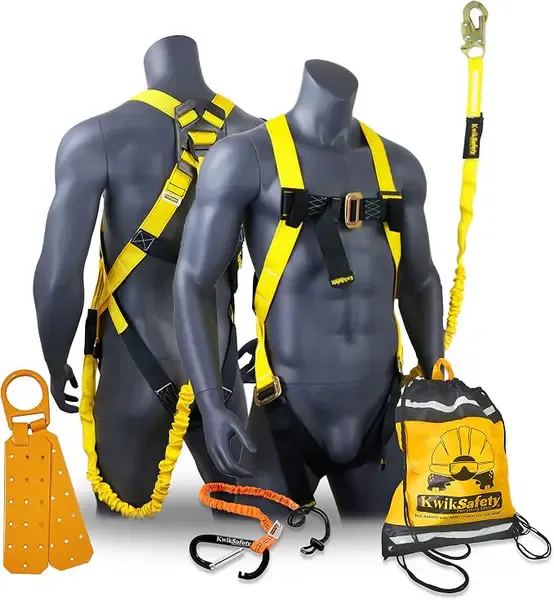
KwikSafety SCORPION Combo Safety Harness with Attached 6' Lanyard and Cross-Arm Strap
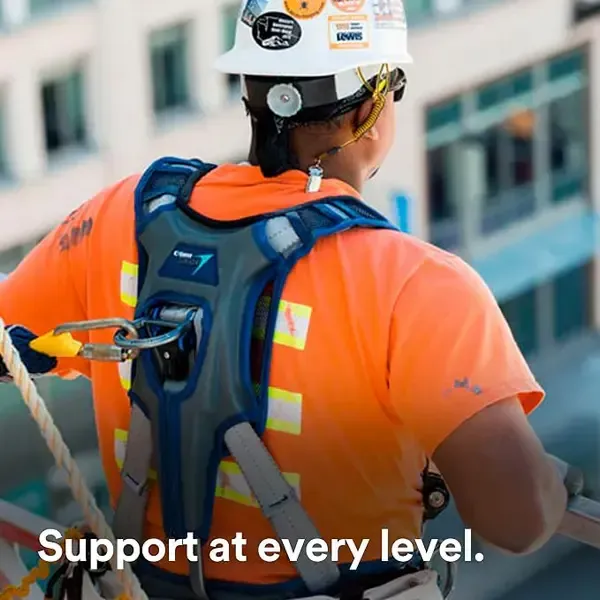
3M Comfort Construction Positioning Safety Harness
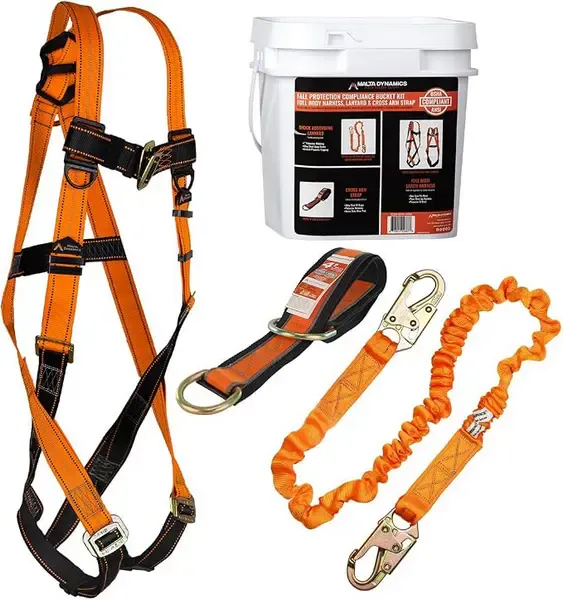
Malta Dynamics Warthog Pass-Thru Safety Harness Kit with Shock-Absorbing Lanyard
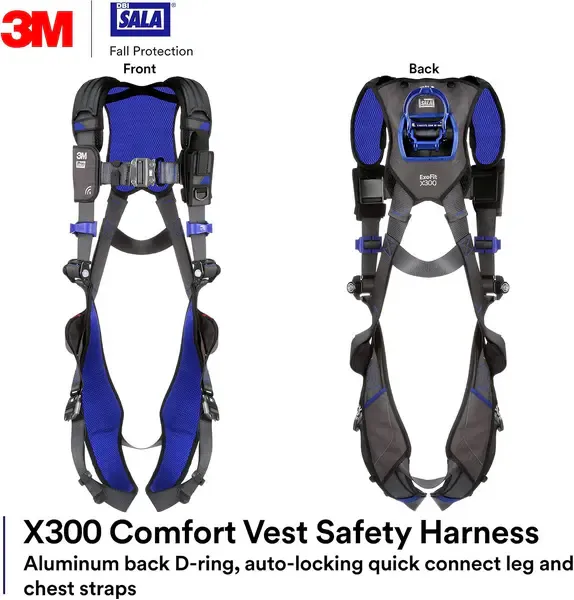
3M DBI-SALA ExoFit NEX Full Body Harness
The bottom line: whichever option fits your crew and budget, a full-body harness with energy-absorbing lanyard is not optional equipment for anyone working from a bucket truck, crane truck, or other aerial device — it's a regulatory requirement, a legal safeguard, and above all, the difference between a worker going home safely and a preventable tragedy. Mapartex is committed to helping fleet operators source the equipment — and the safety
Need Help Sourcing Reliable Heavy Equipment or Parts?
At Mapartex, we bridge the gap between global buyers and verified US utility equipment, offering inspected bucket trucks, cranes, digger derricks, and hard-to-find legacy replacement parts.
- Explore our physically verified inventory: Mapartex Equipment & Parts Stock
- Need a hard-to-find component? Try our Global Equipment & Parts Locator Service.
Author: Mapartex Insights


